
If you’re a dog owner thinking about upgrading your yard, you’ve probably asked yourself one important question: is artificial grass safe for dogs?
Artificial grass has become increasingly popular for pet-friendly yards because it’s durable, easy to maintain, and stays green year-round. But naturally, pet owners want to know whether it’s truly safe for their furry companions.
The good news is that modern artificial turf designed for pets is generally safe for dogs when it’s made from non-toxic materials and installed correctly. In fact, it can even offer some advantages over natural grass.
In this guide, we’ll explore the safety of artificial grass for dogs, the benefits it offers, potential concerns, and what to look for when choosing the right turf.
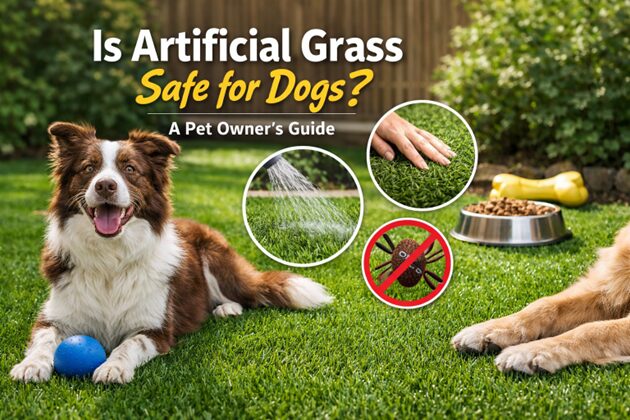
Is Artificial Grass Safe for Dogs?
Yes, artificial grass can be safe for dogs, especially when it is specifically designed for pets.
High-quality synthetic turf is typically made from non-toxic polyethylene fibers that are lead-free and safe for animals to walk, lie, or play on.
Unlike natural lawns, artificial grass also eliminates the need for pesticides, fertilizers, and weed killers, which can sometimes pose risks to pets.
However, safety ultimately depends on factors such as:
- The quality of the turf materials
- Proper installation and drainage
- Regular cleaning and maintenance
- Temperature management in hot weather
When these elements are handled correctly, artificial grass can provide a clean, durable, and pet-friendly outdoor surface.
Benefits of Artificial Grass for Dogs
Artificial turf offers several advantages that make it appealing to dog owners.
1. No Mud or Dirt
One of the biggest frustrations with natural lawns is muddy paws after rain. Artificial grass stays clean and dry, meaning less dirt tracked into your home.
2. Durable for Active Dogs
Dogs love to run, dig, and play. Quality artificial turf is designed to withstand heavy use and claw activity without developing bare patches or holes.
3. No Harmful Lawn Chemicals
Traditional lawns often require fertilizers, herbicides, and pesticides to stay healthy. Artificial grass eliminates these chemicals, making it a safer environment for pets.
4. Easy to Clean
Pet waste can be easily managed on synthetic grass:
- Solid waste can be picked up like on natural grass
- Urine drains through the backing system
- The area can be rinsed with water to keep it fresh
Proper drainage systems allow urine to pass through the turf and into the base layer below.
5. Reduced Allergens and Pests
Artificial lawns do not produce pollen and provide less habitat for pests such as ticks or fleas, which can help dogs with allergies.
Potential Concerns About Artificial Grass and Dogs
While artificial turf can be safe, there are a few considerations pet owners should be aware of.
Surface Heat
Artificial grass can become hotter than natural grass under direct sunlight. On very hot days, the surface may feel uncomfortable for your dog’s paws.
Simple solutions include:
- Installing shade structures
- Choosing heat-reducing turf products
- Lightly spraying the grass with water on hot days
Odor From Dog Urine
Unlike natural soil, artificial turf does not break down urine naturally. Without regular cleaning, odors may develop over time.
Regular rinsing and using pet-safe cleaners can prevent this issue.
Low-Quality Turf Materials
Some cheaper products may contain untested fillers or chemicals. For safety, always choose certified pet-friendly turf from reputable suppliers.
How to Choose Pet-Friendly Artificial Grass
If you’re planning to install artificial grass for your dog, look for these features:
Non-toxic materials
Ensure the turf is lead-free and free from harmful chemicals.
High drainage capacity
Good drainage prevents urine from pooling and reduces odor buildup.
Durable backing
Strong backing helps the grass withstand digging and heavy play.
Soft but resilient fibers
The surface should be comfortable for paws while still durable.
Professional installation
A proper base layer allows liquids to drain efficiently and keeps the turf stable.
Is Artificial Grass Better Than Natural Grass for Dogs?
Both options have pros and cons, but many pet owners prefer artificial grass because it offers:
- No muddy paws
- Less maintenance
- A cleaner and more consistent play surface
- No pesticides or fertilizers
Natural grass, however, stays cooler and provides a more natural sensory experience for dogs. The best choice often depends on your climate, yard size, and maintenance preferences.
Final Thoughts
So, is artificial grass safe for dogs?
In most cases, the answer is yes. Modern pet-friendly artificial grass is designed to be non-toxic, durable, and easy to maintain. With proper installation and regular cleaning, it can create a safe and comfortable space for your dog to run, play, and relax.
For many homeowners, artificial turf provides the perfect balance of low maintenance, year-round greenery, and a dog-friendly yard.